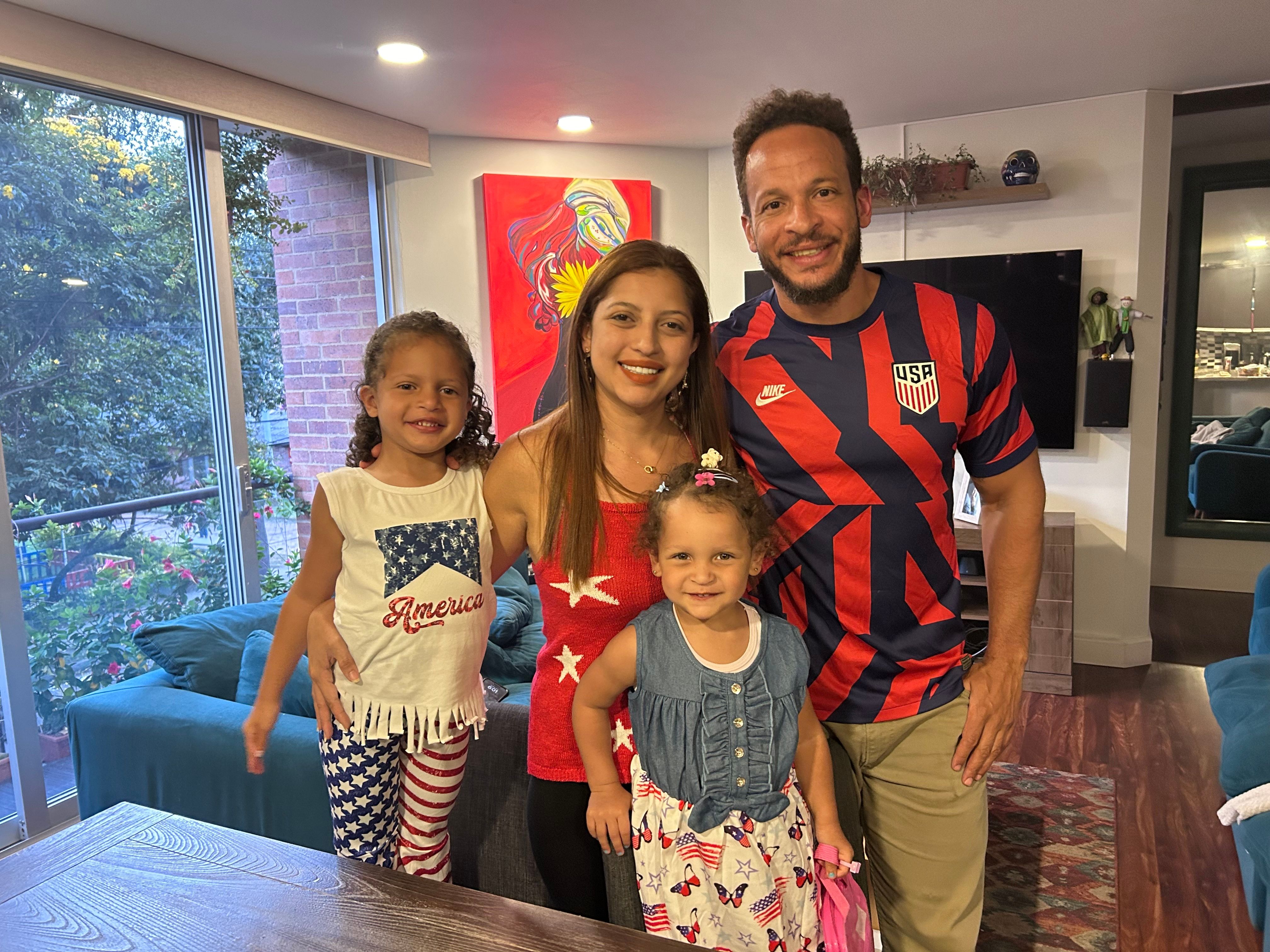
After traveling through much of South America in 2009, I decided to move to Bogotá, Colombia, in 2010 for “six months to improve my Spanish.” The plan was to return to the U.S. job market with a tangible, real-life skill that might help me get ahead. Now, as a husband to a Colombian wife and father to two dual-citizen Colombian-American daughters, this is the story of how “six months to improve my Spanish,” turned into fifteen years—and counting.
In my late 20s, Colombia seemed like the perfect place to wait out the economic recession. And why not? The country boasts beautiful women, a vibrant nightlife, stunning natural beauty, rich cultural destinations, and some of the friendliest people in the world. At that time, Colombia was still an under-the-radar destination—its image tarnished by the drug wars of the 1980s and 1990s, and a lingering internal conflict with the FARC-EP and other illegal armed groups that had spanned over fifty years. Despite these scars, it was a beautiful moment to be in Colombia: the country was slowly but surely healing. The government had regained control over major highways, pushing rebel groups deep into the jungle and making land travel safe again. The middle class was growing, more young women were receiving education than ever before, and poverty was in steady decline. A sense of optimism could be felt throughout the country.
It’s a cliché, but it’s true—travel often teaches us more about ourselves than the cultures we’re exploring. That truth becomes even clearer when you choose to live in a country different from the one you were raised in. I’ve always been a natural wanderer, and Colombia offered me more than many other countries combined. With Bogotá as my home base, I traveled extensively. As a teacher, often joined by fellow teachers, we explored as much of the country as we could afford and every trip left me yearning for more. Cartagena often steals the spotlight with its majestic Spanish colonial architecture and Caribbean views, while Medellín is known for its nightlife and beautiful women—but Colombia is so much more than just those two cities. The country is overflowing with natural wonders, cultural heritage sites, and undescribed life-changing experiences. Even after 15 years here and multiple yearly trips, my list of places to visit never seems to get any shorter.
Nevertheless, beyond all the beauty and culture, Colombia’s most valuable resource is its people. There is no greater reason I now call Bogotá home than meeting my future wife, Alejandra, in 2013. Meeting Aleja and her entire family fundamentally shifted the way I thought about family—what it means, and what a family can achieve. When I knew she was the one, I asked her father for his blessing in 2015 and we were married in 2016. Our international wedding was filled with guests from the U.S., Europe, and South America. Colombia has given me so much, and the fact that it’s a place my friends and family are eager to visit is a true gift. When we bought our first apartment, a guest bedroom was non-negotiable—we’re lucky enough to receive multiple international visitors every year, and there’s no slowing down that train, and why would we want to?
To close, Colombia has given me a stable and beautiful place to raise our two daughters. We are surrounded by family, and we’re fortunate enough to travel in and out of the country each year. Everyone is born somewhere—some places luckier than others—but choosing your country as an adult forces you to reflect on your values, what you can offer a country, and what it can offer you. Taking that leap of faith to move to Colombia for “six months to improve my Spanish” has brought me more happiness than I deserve, I couldn’t have made a better decision.